Sales objection handling: 15 common objections and how to answer them
An objection is rarely a no. It’s usually a question, a worry or a test of whether you’re worth the time. Here is a simple four-step method, answers to the 15 objections B2B sellers hear most, and how to handle objections in LinkedIn and email replies.
Objection handling is responding to a prospect’s concern in a way that keeps the conversation moving. A simple method works for most objections: listen fully, acknowledge the concern, ask a question to understand it, then answer with something specific, such as a number, an example or an option. The most common B2B objections are about price, timing, an existing supplier, authority and “just send me some information”. In written outreach, short and fast answers work best. LinkedClient handles common objections in LinkedIn and email replies within five minutes on autopilot and passes tricky ones to you. You can try it free for 14 days, no card needed, and your first month after the trial is $79.
Key takeaways
- Listen, acknowledge, ask, answer.
- Most objections are questions in disguise.
- Ask before you answer.
- Answer with proof, not pressure.
- In writing, keep it short and quick.
How do you handle a sales objection?
Listen fully
Let them finish. The real concern is often at the end of the sentence.
Acknowledge
Show you heard it: “That makes sense, many teams feel that way at first.”
Ask a question
Find out what’s behind it: “When you say timing, is it budget or bandwidth?”
Answer with proof
A number, an example or an option, and then check whether it helped.
Popular variations include LAER (listen, acknowledge, explore, respond) and “feel, felt, found”: I understand how you feel, others felt the same, and here’s what they found.
What are the most common sales objections, and how do you answer them?
| Objection | Often means | How to answer |
|---|---|---|
| “It’s too expensive.” | Value isn’t clear yet | Ask what they compare it with, then show the cost of the problem |
| “We don’t have budget.” | Not a priority, or the wrong budget owner | Ask when budgets are set and who owns them |
| “Now isn’t a good time.” | Busy, or not convinced | Ask what would make it a good time, and agree when to check back |
| “Send me some information.” | A polite way out | Ask what they’d like to know, so you send only that |
| “We already have a supplier.” | Switching feels risky | Ask what they’d improve, and offer a small side-by-side test |
| “I’m not the right person.” | True, or a deflection | Ask who is, and whether they’d introduce you |
| “We do this in-house.” | Proud of their team | Ask how much time it takes, and position yourself as extra capacity |
| “I need to talk to my team.” | More people decide | Offer a short call with them, or a one-page summary |
| “We tried something like this.” | A bad experience | Ask what went wrong and show how this is different |
| “Not interested.” | No reason given yet | Ask one respectful question, then let it go |
| “How did you get my details?” | A privacy concern | Answer honestly and offer to remove them |
| “Call me next quarter.” | Genuine timing, or a brush-off | Agree a date and ask what will change by then |
| “Your competitor is cheaper.” | Comparing on price only | Compare what each includes and what it costs to switch |
| “It won’t work for us.” | Worried about fit | Share an example from a similar company |
| “We’re too small for this.” | Fear of overkill | Show the smallest version and what it costs |
How do you handle objections in LinkedIn and email replies?
Written objections need shorter answers than spoken ones. Reply quickly, address one point, and end with a question that’s easy to answer.
Example: “Fair question. Most of our customers already had a CRM too. We add the outreach and booking on top, so the CRM fills itself. Would it help to see how that looked for a team your size?”
How do you prevent objections before they come up?
Handling concerns well builds buyer confidence, and confidence matters: Gartner found that confident buyers are twice as likely to report a high-quality deal as buyers with low decision confidence.
- Qualify on fit before you reach out, so price and size objections are rarer.
- Mention a relevant result early, so value is clear.
- Name the common worry yourself: “You might be thinking this takes a lot of time to set up.”
- Show the price range early to people who ask, instead of hiding it.
- Use the prospect’s words in your sales pitch.
Sources: Gartner press release, March 2026.
How does LinkedClient handle objections in your outreach?
Most objections in outreach are the same handful of replies, and how quickly and well you answer decides whether the conversation continues. Elsie answers common objections within five minutes on autopilot, in your tone, and hands the tricky ones to you with the context ready.
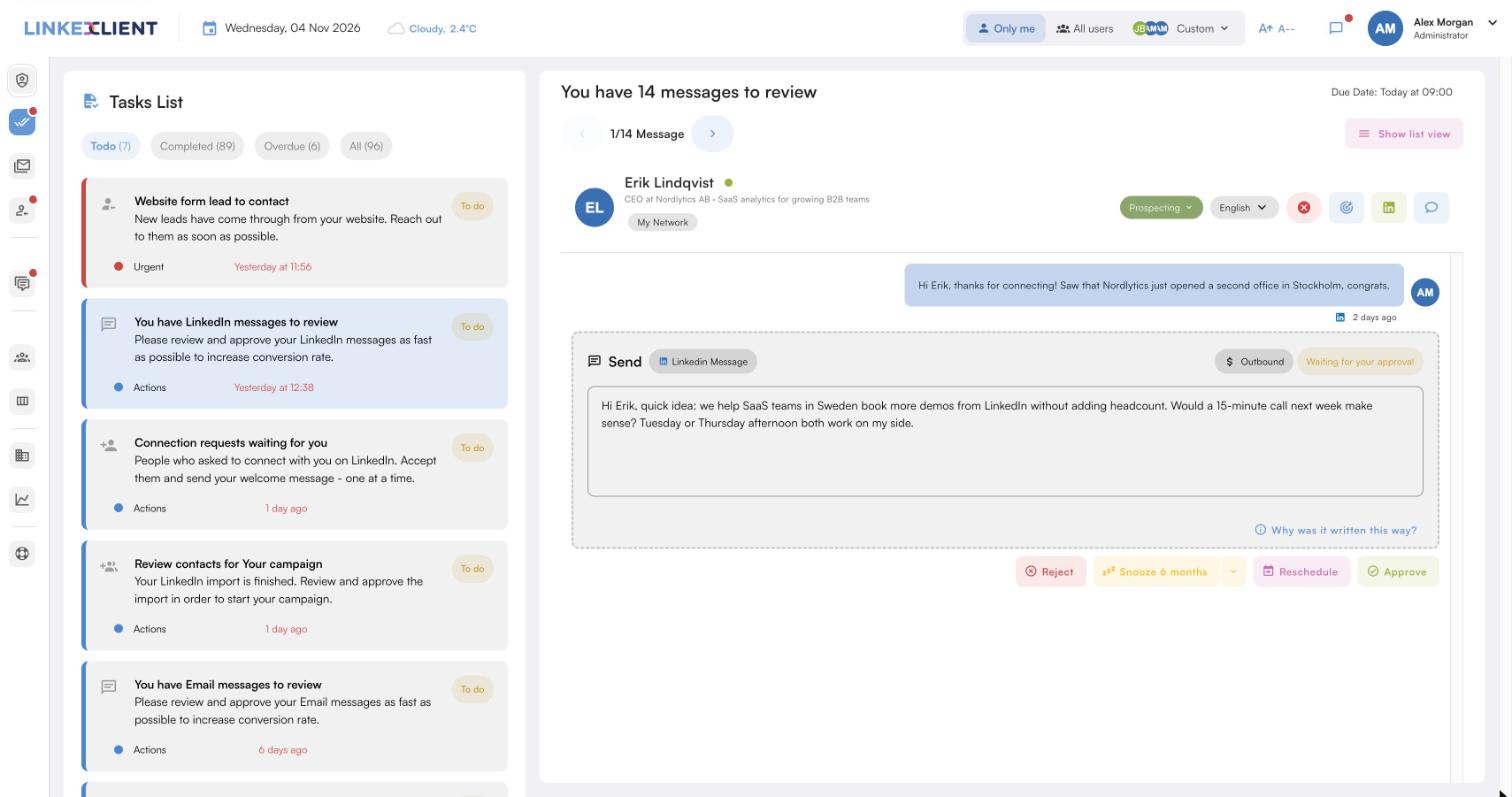
Objection handling
Elsie answers common objections in your tone, using what she knows about your offer.
Replies in five minutes
On autopilot, replies go out within five minutes, while the prospect is still engaged.
Handed to you
Questions that need you come to you, with the conversation ready.
See her reasoning
Every message shows how Elsie reasoned when she wrote it.
| LinkedClient | At a glance |
|---|---|
| What it is | An AI sales assistant. Elsie finds leads, writes to them on LinkedIn and email, answers replies and books meetings. |
| Free trial | 14 days, no card needed. Then $79 for your first month. |
| Price after that | Starter $149 per user per month, or $129 billed annually. Professional (2+ users) $299, or $249 billed annually. All 109 features in every plan. |
| Works on | LinkedIn Basic, Premium, Sales Navigator and Recruiter |
| Meetings | Booked in the conversation, without calendar links, in Google or Microsoft calendars |
| Connects to | HubSpot, Pipedrive, Salesforce, Zapier, webhooks and a public API |
| Compliance | GDPR and EU AI Act compliant |
| Setup | Live in about 15 minutes, with onboarding from a real person |
Never leave an objection unanswered
Try it free for 14 days, no card needed, then just $79 for your first month. Or book a 30-minute demo and we’ll show you who Elsie would contact for your business.
What results do LinkedClient customers get?
These results cover all of LinkedClient. Answering every reply well is one part of it.
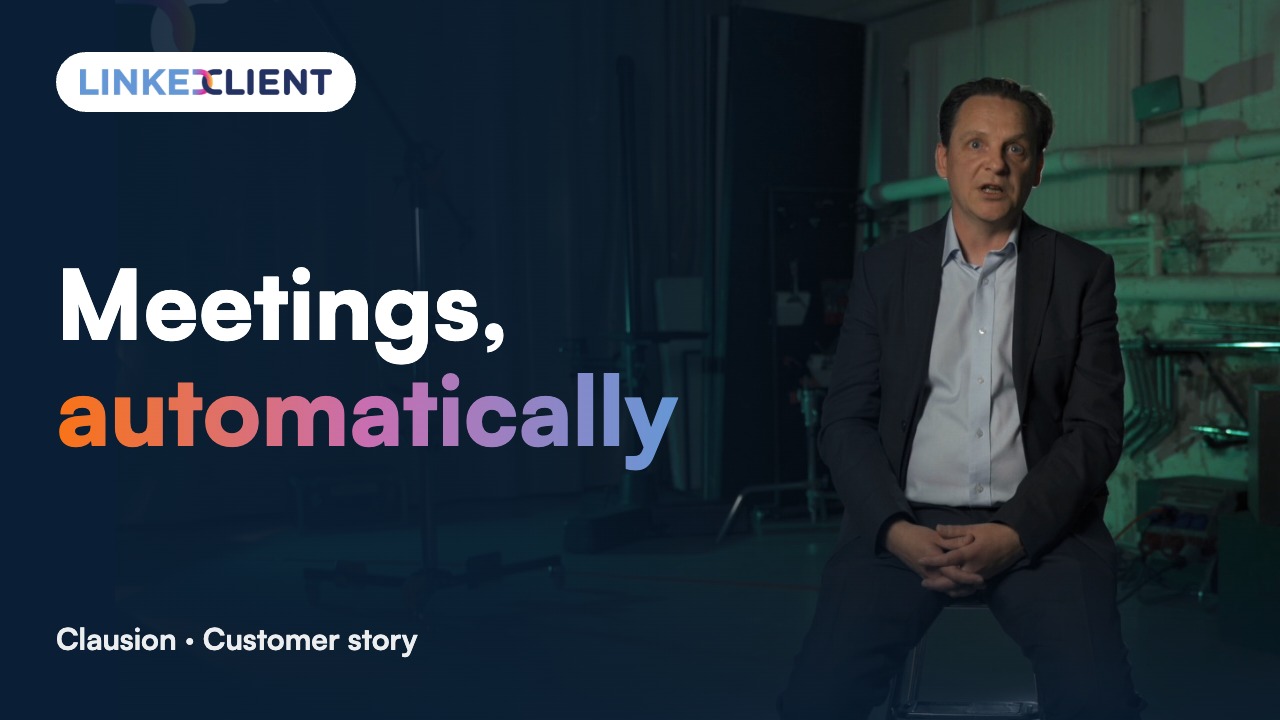
“We can pinpoint the people we want to contact and actually get meetings with them automatically.”
Keep reading
What is objection handling in sales?
Responding to a prospect’s concern, such as price or timing, in a way that addresses it and keeps the conversation moving.
What are the most common sales objections?
Price, no budget, bad timing, “send me information”, an existing supplier, “I’m not the right person” and “we do it in-house”.
How do you handle a price objection?
Ask what they’re comparing the price with, then show what the problem costs them today and what the result is worth.
How do you respond to “send me some information”?
Ask what they’d most like to know, send only that, and suggest a short call to go through it.
What is the best objection handling technique?
Listen, acknowledge, ask a question, then answer with proof. Asking before answering is the step most people skip.
Can AI handle sales objections?
Common ones, yes, especially in written replies. Complex or high-stakes objections should still go to a person.
What are objection handling frameworks?
Simple structures for responding, such as listen, acknowledge, ask, answer; LAER (listen, acknowledge, explore, respond); and feel, felt, found.
How do you handle “not interested”?
Respect it, ask one light question, such as whether it’s the timing or the topic, and let it go if they confirm.
How does LinkedClient handle objections?
Elsie answers common objections in LinkedIn and email replies within five minutes on autopilot, in your tone, and passes tricky cases to you. Try it free for 14 days, then pay $79 for your first month.
Want every objection answered within minutes?
Start your free 14-day trial today and Elsie can start this week. If you keep going, your first month is just $79. Or book a 30-minute demo and we’ll show you who she would contact for your business.
14 days free · No card needed · $79 for your first month